Performance analytics and trend mapping are crucial for organizations seeking to refine their operational strategies. By examining identifiers such as 291720200, 306339593, and 8582511550, businesses can identify underlying patterns that inform decision-making. These insights can significantly impact resource allocation and market responsiveness. However, understanding the full implications of these trends requires a deeper exploration into the methodologies and tools that drive effective analytics. What remains to be uncovered is the true potential of these identifiers in shaping strategic outcomes.
Understanding Key Identifiers in Performance Analytics
In performance analytics, key identifiers serve as critical metrics that enable organizations to gauge their operational effectiveness and strategic alignment.
The significance of these identifiers lies in their ability to reveal data correlation and support analytics interpretation.
Analyzing Trends Through Data Metrics
Key identifiers in performance analytics lay the groundwork for effective trend analysis.
Through meticulous trend identification, stakeholders can uncover significant patterns in data metrics.
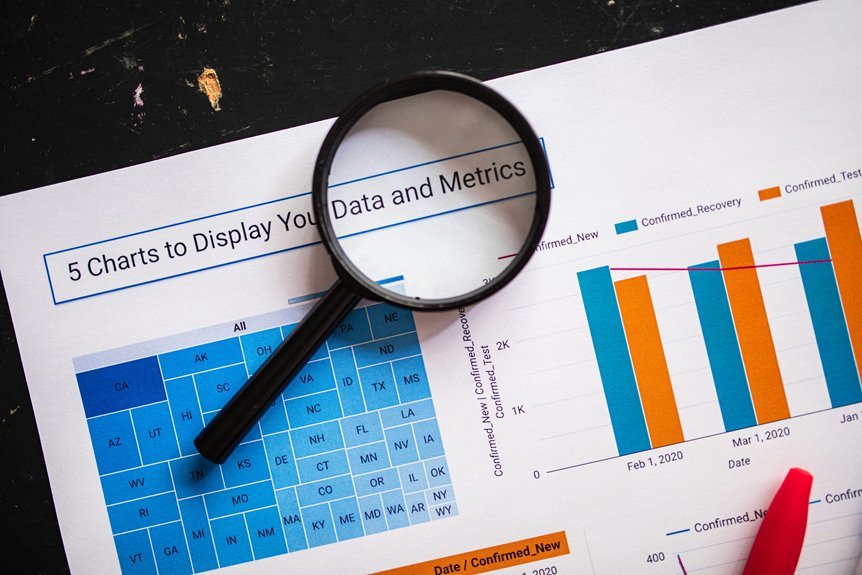
Data visualization techniques enhance comprehension, allowing for clearer insights into these trends.
Strategic Decision-Making Using Performance Insights
While organizations increasingly rely on performance insights to inform their strategies, the ability to translate data into actionable decisions remains paramount.
Data-driven strategies leverage performance forecasting to anticipate market shifts and optimize resource allocation.
Enhancing Business Outcomes With Analytics Tools
Leveraging analytics tools empowers organizations to enhance business outcomes by transforming raw data into meaningful insights.
By utilizing business intelligence platforms, companies can visualize trends and performance metrics effectively.
Predictive modeling further enables businesses to anticipate future scenarios, fostering proactive strategies.
This data-driven approach not only optimizes operational efficiency but also supports informed decision-making, ultimately driving sustainable growth and competitive advantage.
Conclusion
In a world where data reigns supreme, organizations wield performance analytics like a magician’s wand—transforming chaotic numbers into wise oracles of business strategy. However, as stakeholders gather around their glowing screens, entranced by colorful charts, one must wonder: are they truly uncovering insights or merely chasing digital sparkles? In this grand theater of analytics, the real magic lies not in the trends themselves, but in the ability to discern the difference between meaningful patterns and mere statistical confetti.